
57% of Brits say moving house is one of life’s most miserable experiences according to a survey by Legal & General. A separate survey by Compare My Move went even further, placing it above childbirth on the stress scale.
Now, I’m not about to sit here and tell you that pushing a human out of your body is a walk in the park. But moving does have its own very particular brand of pain: the relentless admin that multiplies just when you think you’re done, the existential dread of staring at a half-packed room at 11pm wondering where it all went wrong, and, if you’re moving into a house share, that quiet, creeping fear that one of your new housemates has a deeply niche and alarming hobby they forgot to mention in the group chat.
Whether you are moving out of your family home for the first time, or you’re a seasoned house-sharer in search of new digs, this is the guide I wish I’d had. Moving into a house share is one of those things where you don’t know what you don’t know. And only someone who’s been through it can really advise you.
That’s what The House Share Hub is here for: to help you navigate some of life’s most stressful situations, one shared fridge at a time.
Let’s start at the beginning.
How to Find the Right House Share
You’ve got two paths in front of you:
- Find a housemate first, then find a property together
- Join an existing house share

Option 1: Buddying Up First
If you already have a friend you can move in with, congratulations – you’ve skipped the hardest part. Go straight to finding a property and don’t look back.
I’ve done this a few times and it really is the easier route. Hunting for a home and a housemate simultaneously is a lot. One problem at a time.
A word of warning though: you don’t truly know your friend of seven years until you’ve witnessed their morning routine and had a heated debate about whether eggs belong in or out of the fridge. (Out. The answer is out. This is not up for discussion.)
If you need to find a buddy from scratch, start with people you already know or friends-of-friends. Post on your personal social media, mention it at work, or dig around in community groups for your area. If you’re a student, your university Facebook group (do the youth still use Facebook?) or accommodation noticeboard is worth a look. Someone with even a loose connection to your existing circle already comes with a soft stamp of approval – not a guarantee, but a start.
My advice: be a little selective. Nice homes are hard to find, but nice people aren’t. Think about who you actually gel with – the people whose energy matches yours – and look for that in a potential roommate. You’re going to be sharing a bathroom. It matters.
Option 2: Join an Existing House Share
The upside here is simple: you only have one thing to find. The downside is it comes with pre-installed housemates you haven’t handpicked.
Fair warning: SpareRoom competition is fierce. With the rental market being what it is, house hunting right now has genuine Hunger Games energy. If you’ve ever stood outside a property, sizing up the other viewers while everyone smiles politely, waiting for their audition for the part of ‘new housemate’, you know the feeling.
To give yourself the best shot:
- Be positive. Nobody wants to live with someone who spends the viewing venting about their last house.
- Don’t seem desperate. I know. I know. But if you can project “I’m just exploring my options” rather than “I will cry if I don’t get this room,” you’ll come across better. It’s theatre. Play the part.
- Try to meet the current housemates before signing anything (not just the landlord or agent). They’re the people you’ll actually be living with so don’t miss the opportunity for a vibe check.
- Ask why the last person left. The answer tells you a lot.
Things to look out for:
- High turnover. If people keep leaving, something’s off. Could be the landlord, the housemates, the damp. Either way, proceed with caution.
- Long-term residents. Usually a great sign. It means people actually want to be there. It might mean staking your claim in shared spaces takes a little longer, but that’s manageable.
Finding the Right Home: The Best Rental Sites
Whether you’re going in solo or with a buddy, here’s where to start your search:
- Spareroom: the go-to for finding rooms in existing house shares, or listing a room if you’re forming your own
- Rightmove and Zoopla: best for finding a whole property with the exact number of rooms you need
- OpenRent: great for private landlords renting without a letting agent, which often means lower fees and more direct communication
How to read between the lines of a listing:
Estate agent speak is practically it’s own language at this point. A quick translation guide:
- Cosy = small
- Single room = single bed (not a double for single use)
- Characterful = the layout makes absolutely no sense
- Recently refurbished = they painted over the mould
- Bustling neighbourhood = bring earplugs
- Sought-after location = we’ve added £200 to the rent
Okay I’m joking about a few of them but it’s good to be aware.

Red flags to watch out for:
- Landlords avoiding written contracts – always get everything in writing
- No mention of deposit protection – your deposit must legally be protected in a government-approved scheme within 30 days of payment
- Asking for multiple months rent upfront – from May 2026, this is illegal in England under the Renters’ Right Act
What to ask when viewing:
A polite interrogation can surface the information you need.
- How much do bills usually come to per month?
- What are neighbours like?
- How responsive is the landlord when something needs fixing?
- Why did the last tenants leave?
- What is the water pressure like?
- Is there any storage?
- What are the other housemates’ schedules?
What to Look for in a Potential Housemate
Choosing the right housemate can make or break the vibe in your home. If you’re not sure where to start, here’s what I’ve found matters most.
The non-negotiables:
- Organisation. Specifically with finances. This is a big one and a bare minimum of a good roommate. Money issues are one of the fastest ways to create tension in a house share. Whilst you can’t exactly check someone’s bank statements, you can get a sense of things by asking how bills are managed. A well-run house will usually have a clear system in place, so listen out for any vagueness or signs of disorganisation – they can be early red flags.
- Compatible schedules. If you work 9–5 and your housemate works nights, and the walls are thin, nobody’s sleeping well. It’s not a personality flaw, it’s just a mismatch.
- Decent vibes. They seem like someone you could share a kitchen with without it becoming a silent war. That’s the (fairly low) bar.
- Respectful. They tidy up after themselves, they don’t have unruly guests over all the time, and they treat your belongings with respect. Revolutionary stuff.
If you find it hard to read people in the moment, bring a friend along to viewings. A second opinion – especially from someone not emotionally invested in getting the room – is worth its weight in gold.
One final note: you’ll learn a lot about yourself living with other people. Some of it will be delightful. Some of it will be deeply humbling.
The Boring Bits (Unskippable)
I know this isn’t the fun part, but getting this right beforehand will save you stress (and money) later.
Your tenancy agreement. Read it properly. Check whether it’s a joint tenancy (one person collects and transfers the full rent to the landlord) or individual tenancies (each person pays separately). Check if you’re responsible for maintaining shared corridors, garden upkeep, or any communal spaces outside your flat.
Deposit protection. Your landlord is legally required to protect your deposit in a government-approved scheme within 30 days of receiving it. The main schemes are the Deposit Protection Service (DPS), MyDeposits, and the Tenancy Deposit Scheme (TDS). If you’re moving into an existing tenancy mid-way, the outgoing tenant’s deposit is often transferred directly to you when the paperwork is updated.
Inventory check. When you first move in to a new home, you’ll usually be given an inventory (a list of everything in the property and its condition). Check this carefully and flag any damage straight away – ideally with photos. This protects your deposit when you move out.
HMO licensing. Most house shares fall under HMO (House in Multiple Occupation) rules. This means the landlord must meet certain safety standards (like fire alarms, safe exits, etc.). You don’t need to become an expert, but it’s worth checking the property is compliant and raising a request if you think something is off.
Break clause. Check if your contract includes a break clause (the option to end the tenancy early after a certain period, usually with notice). Not all contracts include this, and it doesn’t always apply equally to both you and the landlord – so read the details carefully. If there’s no break clause, you may be responsible for finding a replacement tenant if you want to leave before the contract ends.
Bills – what’s included? Some house shares include bills in the rent, other’s don’t. Make sure you’re clear on what you’re responsible for (gas, electricity, water, broadband, TV licence). This will make a big different to your monthly costs.
Council tax. Bands vary by local council, so check yours early. Full-time students are usually exempt; everyone else, factor it into your budget.
Guarantors. Some landlords, particularly in London or for younger renters, will ask for a guarantor (usually a parent or guardian who agrees to cover rent if you’re unable to). It’s worth thinking about this in advance so you’re not caught off guard when you start viewing properties.
Right to Rent checks. Landlords in England are legally required to verify you have the right to rent in the UK. Have your documents ready. Non-UK nationals may need to provide additional documentation.
Rent due dates. Note these and set up standing orders accordingly so you don’t have to think about it again.
Repairs and maintenance. Check how issues are reported and how quickly the landlord or letting agent typically responds. Knowing the process upfront can save time and frustration later.
Parking permits. If you have a car, check whether you’ll need a parking permit, especially in busy or residential areas. Some properties come with allocated parking, while others require you to apply through the local council. It’s worth checking availability, costs, and waiting times in advance, as permits aren’t always guaranteed.

Moving Day
Moving day has a way of being both more chaotic and more emotional than you expect (speaking as someone who once cried in front of their movers). Here’s how to take the edge off:
- Book time off. Sounds obvious, but don’t underestimate how much time you’ll actually need. Give yourself a buffer day from work or studies if you can.
- Get your internet sorted early. Set it up as soon as your move-in date is confirmed. It can take several days to activate, and a few days without Wi-Fi will test your character in ways you didn’t anticipate.
- Hire a removal company or van. For larger moves, it’s worth the cost. For smaller moves, a van rental and a couple of willing friends (bribed with pizza) works fine.
- Stock up on boxes. Apparently supermarkets give them away for free if you ask! I’ve never tried this, but let me know if it works for you. You can also buy them from B&Q, Amazon and other DIY stores.
- Update your address. This is the admin task that feels never ending. Key things to update: your bank, your GP, HMRC, your employer, the electoral roll, any subscriptions, and anyone who sends you post. Future you will be grateful.
- Sort your contents insurance. Easily overlooked, genuinely important. It covers your belongings inside the property and is usually quite affordable for renters.
Your First Two Weeks
The first few weeks set the culture of the house. Get this bit right and you’ll save yourself months of awkwardness.
Conversations to have early:
- How you’ll split bills (I’ve written a full guide on this)
- A rough cleaning rota or system (guide here)
- Fridge and cupboard allocation – sounds petty, definitely isn’t
- Who works from home and where – shared spaces during the day need rules if multiple people are using them
- Guest policy – how often, how long, overnight guests?
- Shared items: what’s communal, what’s personal, and where’s the line
Things to organise:
- A house WhatsApp group (get this up and running on day one)
- A first house dinner or trip to the pub – it doesn’t have to be a big thing, but breaking bread together early makes a difference
- A loose list of things you want to do together: films, local spots, whatever fits the vibe
One trick I’ve picked up: organise the next thing while you’re still doing the first one. It keeps the social momentum going without anyone having to make a big deal of it.
Shared living works best when people make an effort to connect, even in small ways.
Decorating Your Room
Making your room feel like your own is important, especially in the early weeks when the house doesn’t quite feel like home yet.
Budget-friendly finds:
- Facebook Marketplace, Gumtree, eBay, Shpock – brilliant for secondhand furniture and often much better quality than you’d expect
- Charity shops – underrated for prints, frames, throws, lamps, and those little bits that add personality
- IKEA, Wilko, Amazon – great for kitchen and bathroom basics without destroying your bank account
- Homebase, B&Q – go-to spots for DIY essentials, plus a surprisingly good selection of affordable plants to bring your space to life
Renter’s tip: Command strips are an absolute gift if you’re not allowed to put nails in the walls. They hold more than you’d think, they come off cleanly, and they’ve saved many a deposit.
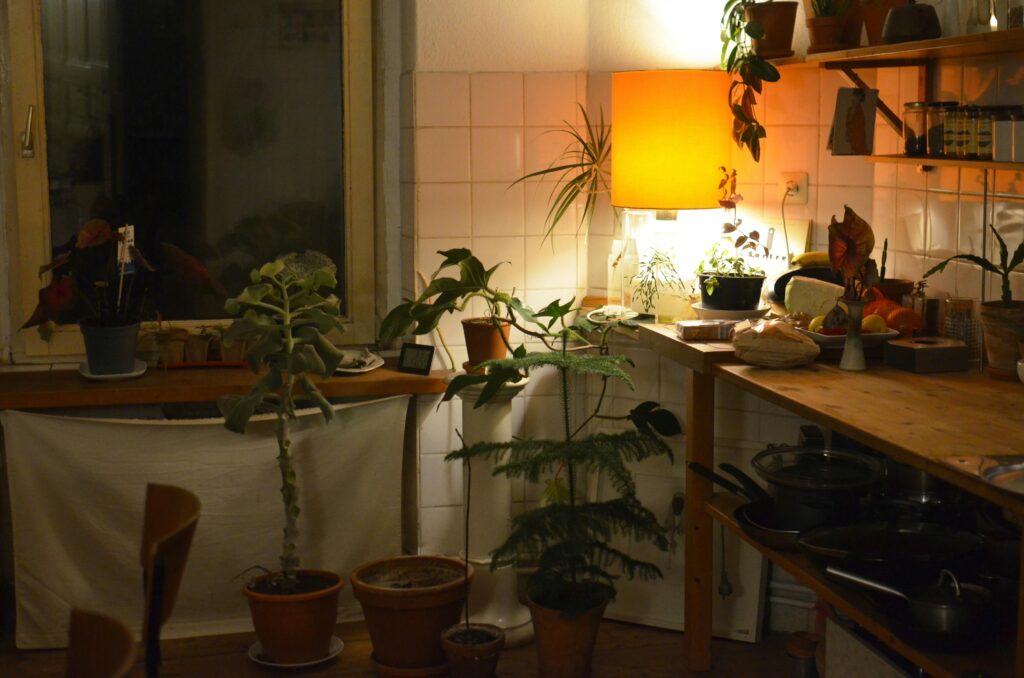
One more thing: Lamps. Overhead lighting is the enemy of a cosy room. A couple of well-placed lamps will transform the space. Trust me on this one.
What No One Tells You About House Shares
It won’t feel like home straight away – and that’s okay. There may be awkward silences before the comfortable ones, and small talk before you find each other’s wavelength. Give it time.
You don’t have to become best friends with your housemates. What matters is being able to operate as a functional household together – and that takes small, consistent effort from everyone.
The first month will cost more than you think. Between your deposit, first month’s rent, and any overlap with a previous tenancy, the outgoings stack up fast. Build in a buffer if you can, and go easy on yourself if the room isn’t Pinterest-perfect by week two.
Protect your privacy, and your space. Lay quiet claim to your corner of the shared areas early as confidently as you can.
Finally, setting up your room will take longer than you think, even if you came fully prepared. That’s just how it goes. You’ll get there.