
One of the biggest sources of conflict in shared living – whether that’s a house share, flat share, or even family homes – is how to keep a house share clean. If only all humans shared the same definition of “clean and tidy” – shared living would be an absolute breeze.
Keeping a house share clean usually comes down to one thing: having a clear cleaning system. Without a rota, shared responsibilities, or agreed expectations, mess quickly builds up and resentment follows.
Picture this. You’re coming home from a relaxing holiday at the beach. Your only worry was what cocktail to order next, and even the delayed flight couldn’t ruin your mood. Then you walk back into your house share and crash land into the grey reality of overflowing bins, crumbs on the counter, and the leftover lettuce exuding the distinct aroma of eau de E Coli.
The tension builds. The passive-aggressive WhatsApp drafts begin. You try to swallow your resentment to keep the peace.
After living with 20+ housemates, I can tell you this: without systems, a shared home is as tidy as its messiest person.
Most people aren’t expecting a show home – they just want a clean, uncluttered space that feels calm after a busy day. After all, a home where multiple adults live together is bound to look actively lived in, but our lives are hectic enough without adding browning bananas and dying plants to the mix.
Maybe you’re on the other side of this. Maybe you don’t notice the mess until it’s all piled up and someone has made a “jokey” comment about it.
But here’s the thing: it’s not mess that alters the vibe of a house share. It’s unspoken expectations and unequal division of labour.
Conflict around cleaning is normal. And, in some ways, unavoidable. The key isn’t to avoid the conflict, it’s to create a system that makes cleaning feel fair. So before we get into that, let’s look at why cleaning causes so much tension in the first place.

Why Cleaning Causes So Much Tension in House Shares
Different Cleanliness Standards
Some people were raised with Sunday deep cleans and labelled cereal containers. Some were not. Neither is wrong. But when expectations aren’t discussed, irritation can build fast.
Invisible Labour & Resentment
The person who “just does it” often ends up burnt out. They tell themselves it’s easier to wipe the counter than argue…until one day it isn’t.
Weaponised Incompetence
It’s not just romantic relationships. Anyone is capable of suddenly “not knowing” how to load a dishwasher properly.
No Agreed Rules
Most house shares never actually define cleaning expectations. There’s an assumption that everyone knows what “clean” means – and that assumption is usually wrong.

So what can you do about it?
4 Cleaning Systems That Actually Work in a House Share
First of all, I must caveat by saying that there is no perfect system. There is only the right system for your household. Here are four that have been tried, tested, and actually work for shared living, along with an honest take on each.
1. The Weekly Cleaning Rota
Best for students or those new to house sharing, and anyone who like structure and routine
Assign key areas on a weekly basis (kitchen, bathroom, living room, bins, floors) and rotate every Sunday. Keep it somewhere visible: the fridge, a shared doc, or a printed schedule on the wall. The visibility is the point. If it lives in someone’s head, it doesn’t exist.
This is the most common system for a reason – it’s clear, creates accountability, and feels fair because everyone takes a turn at everything.
The downside is that it requires consistent buy-in and becomes very obvious, very quickly, when someone isn’t pulling their weight. I’ll leave it up to you to decide whether this is a pro or a con.
There are plenty of cleaning rota templates available online – and this is something I may create for The House Share Hub in the future.
2. The Zone Ownership Method
Best for long term house shares and busy professionals
Each person permanently “owns” one area of the house. For example, Person A takes the bathroom, Person B looks after the kitchen surfaces, Person C handles bins and communal floors. Ownership rotates every few months to keep things fair.
This works well because it removes the weekly negotiation and creates a sense of personal responsibility. People tend to take more pride in an area that is consistently theirs.
The trade-off is that it can feel unequal depending on how demanding each zone is, and you’ll still need to schedule a deep clean every so often.
3. The Weekly Reset
Best for busy households and conflict-avoidant groups
Everyone tidies for set amount of time each week (Sunday evening for 45 minutes, for example). Put a playlist on, set a timer, and tackle it as a house.
The collaborative energy is the real benefit here. It feels like a shared effort rather than a chore chart, and it can actually encourage better day-to-day habits – nobody wants to spend their whole Sunday reset fixing a week’s worth of mess.
The challenge is coordinating schedules, and it can encourage a “wait for reset day” mentality in the meantime.
4. Hire a Cleaner
Best for professionals with disposable income and larger houses
Yes, sometimes the most peaceful solution is outsourcing. A cleaner coming weekly or fortnightly removes the negotiation entirely and creates neutral accountability – the house gets cleaned regardless of whose turn it was supposed to be.
It’s obviously the most expensive option, and day-to-day maintenance is still required between visits. It can also quietly encourage a “the cleaner will handle it” mentality in the lead-up to each session. But if your household has the budget and the tension, it’s worth serious consideration.
If you’ve tried this in a house share, I’d love to hear how it worked for you – leave a comment below.
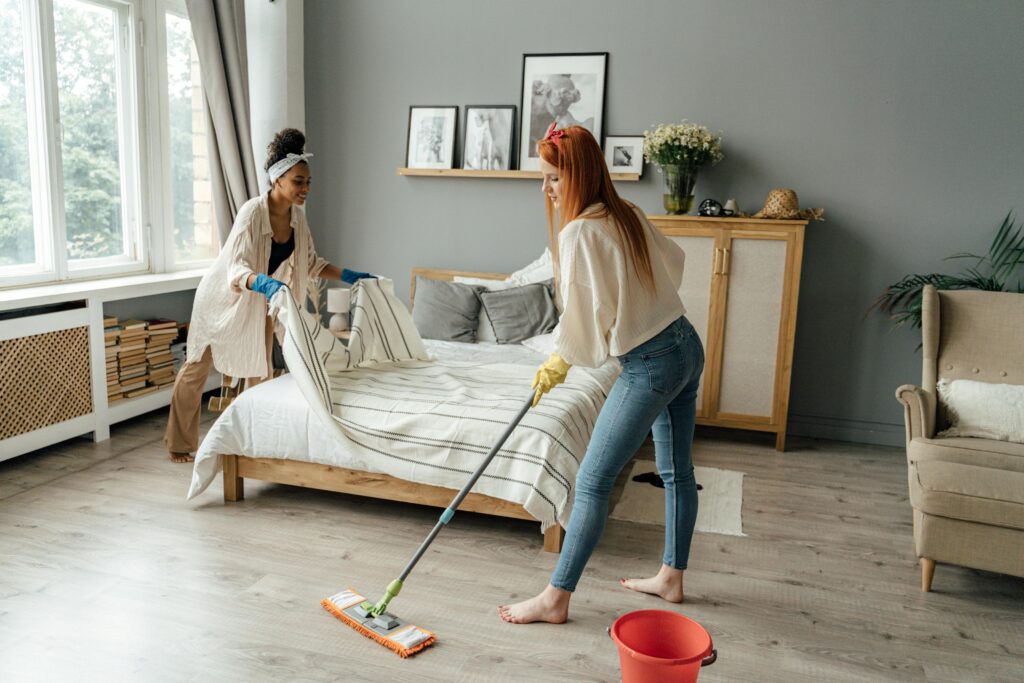
What Cleaning System Works Best?
I’ll be real with you: there isn’t a foolproof option that will guarantee a pristine house.
After years of house sharing, and a lifetime of being, let’s say, particular about cleanliness, I’ve found that a hybrid approach works best:
- Zone ownership during the week
- A weekly rota for high-traffic rooms like the kitchen and bathroom
- A monthly deep clean reset together
It combines the personal responsibility of zones with the fairness of a rota, and the shared reset builds in a regular moment to get on top of anything that’s slipped. It’s not perfect – no system is – but it’s the closest I’ve found to something that actually sticks.
The Cleaning Supplies Every House Share Needs
Whatever system you choose, it only works if the supplies are actually there and easy to find. Keep a communal cleaning cupboard – one central spot that everyone knows and can access. Stock it with the basics and top it up via your shared house pot or cost-splitting app so no one person ends up out of pocket.
The essentials:
- Multi-surface spray
- Bathroom cleaner
- Toilet cleaner and brush
- Bin bags (in all the right sizes)
- Hoover
- Mop
- Rubber gloves
- Sponges and cloths
- Cleaning wipes
The less people have to hunt for supplies, the fewer delays there will be to a clean home.
How to Introduce a Cleaning System (Without Sounding Bossy)
I’m going to be honest. This will probably feel awkward. Even if everyone secretly wants a system, being the one to initiate it can feel vulnerable.
Whether you organise a quick house meeting or send a message in your shared group chat, framing matters. Position it as wanting fairness and calm, not pointing fingers at anyone.
A few conversation starters to help you get the ball rolling:
- “The house feels like it could use a deep clean soon. Are people home on Sunday morning so we can tackle it together?
- “I know we’ve all been super busy lately and things are piling up. Shall we try a simple rota to keep on top of it?”
- “I struggle to notice mess until it gets really bad. I’d be able to stay on top of things with a clear system – shall we set one up?”
The last one is worth noting: not everyone who makes mess is lazy or inconsiderate. Some people genuinely don’t register clutter the way others do. A system helps bridge that gap without it becoming personal.
What to Do If Someone Doesn’t Stick to It
The success of a cleaning system is consistency. But, of course, life happens. How you handle it matters as much as the system itself.
Gentle Reminder: Start with a gentle reminder and assume good intent. Most of the time, people aren’t deliberately ignoring the rota – they’ve just had a rough week. A light “heads up, bathroom is due a clean” in the group chat is usually enough.
Private Conversation: If it keeps happening, have a private conversation. Never shame anyone in the group chat. A quiet one-to-one is far more likely to land well and far less likely to create lasting awkwardness.
Adjust the System: Consider adjusting the system rather than the person. If someone consistently struggles with a particular task or zone, it might be that the system doesn’t suit how they live. A tweak is easier than a tense confrontation.
Let It Go: Easier said than done, but know when to let it go. Not every crumb needs a meeting. Sometimes supporting each other through a busy or difficult season builds more harmony in the long run than strict enforcement. You and your housemates are not on trial in the Court of Cleanliness.
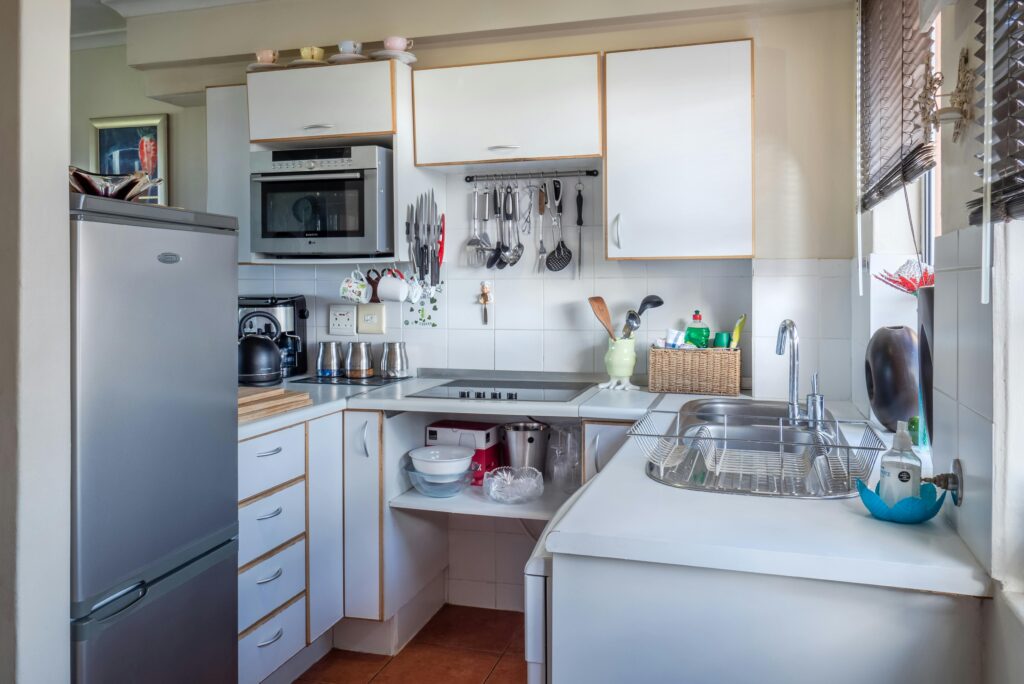
Cleaning Rules Every House Share Should Agree On
Whatever system you go with, these basics prevent the majority of day-to-day arguments:
- Wash dishes within 24 hours
- Don’t leave laundry sitting in shared machines
- Empty bins before they overflow
- Wipe surfaces down after cooking
- Replace what you finish – toilet roll, bin bags, washing up liquid
Simple, but worth saying out loud at the start rather than assuming everyone is working from the same unwritten rulebook.
How to Protect Your Peace in a Messy House
Even with the best systems in place, shared living means occasionally living with standards that aren’t quite your own. After over a decade of house sharing, I’ve learnt that shared living is a skill. And protecting your peace is part of it.
Here’s what helps:
Your Bedroom is a Sanctuary
Keep your own space calm, clean and organised – even when the rest of the flat isn’t. Having one room that’s entirely under your control makes the rest more bearable.
Split Costs for Cleaning Supplies
At minimum, make sure you have a solid bill-splitting system in place so at least the financial load is shared. A shared house pot or cost-splitting app means no one person is quietly bankrolling the bleach.
If you struggle with this, read my guide on how to fairly split costs with housemates.
Noise-Cancelling Headphones
Sometimes it’s not just physical mess – it’s energetic noise. A good pair of noise-cancelling headphones can go a long way to protect your focus and mood.
Lower Your Standards (Temporarily)
Yes, I said it. The dreaded phrase. If you’re overwhelmed at work or university, do not add extra stress trying to control communal mess. Mess is usually temporary. Your nervous system deserves peace more than the kitchen deserves to be spotless.
Work with the capacity you have right now, not the capacity you wish you had.
Pick Your Battles
No one is perfect. There may well be habits of yours that your housemates graciously overlook. Extend that grace back to others. Only escalate the things that meaningfully impact your wellbeing and let the smaller stuff go.
Systems Create Freedom
Cleaning conflict is not unique to house shares – it shows up in every kind of shared home, in every era, everywhere. It doesn’t mean you have bad housemates or that you’re a bad housemate. It means you’re human beings with different habits, living in close proximity.
The goal isn’t a perfect home. It’s a fair one – where the load is shared, expectations are clear, and no one is quietly stewing over whose turn it is to empty the bins. A good system gets you most of the way there. The rest is communication…and a little grace.
If this has helped you, share it with your housemates. Or try one system this week and see how it lands.
All the best from your house sharing friend.

Pingback: Moving Out 101 - Everything You Need Before Moving Into a New House Share - The House Share Hub
Pingback: How to Deal With Difficult Housemates (Without Awkwardness)