
The Case of the Missing Food.
If your housemate is eating your food, you’re not alone. Now I didn’t realise this was as common a problem as it is, but a quick scroll through Reddit’s /badroommates says otherwise.
It paints a picture of an innocent housemate, diligently unpacking their groceries for the week, recipe book at the ready for tomorrow’s dinner. It’s going to be a busy week, so they’ve bought themselves some treats to get through to their deadline.
However, as the clock strikes midnight, another sneaky housemate scurries across the flat, quietly squirrelling away some extra chocolate and cheese whilst the world sleeps.
As the diligent housemate starts their busy week, they slowly realise that their snack cupboard supplies have depleted far quicker than they imagined. In fact, they’re going to have to make another grocery run – the last thing they need after a week of late nights.
So perhaps this is a common experience. The real question is: is it actually that serious? Reddit would suggest…yes. Yes it is. So let’s take it seriously.
And if you’re wondering if this is actually a thing – yes, this is, unfortunately, a symptom of shared living. As Reddit says: you’re not crazy.
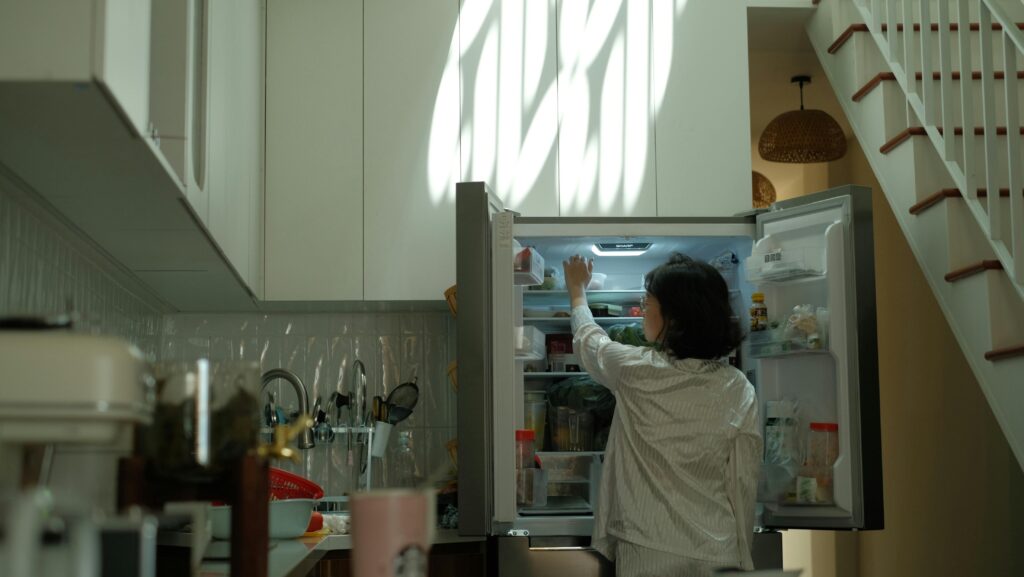
Why Your Housemate Keeps Eating Your Food
Are they doing it on purpose? Did you do something to upset them and this is your punishment?
Probably not. In reality, it usually comes down to one of these:
- Different upbringings and expectations. Some people grew up in households where food was communal – fridge blindness is real! They may have had previous house shares where the unspoken rule was to share everything, and nobody told them the rules had changed.
- The “borrowing” mindset. They fully intend to replace it. They also fully forget to. You’ve still lost your Tuesday night pasta either way.
- Boundary-blindness. Some people simply struggle to clock where their needs end and other people’s boundaries begin. It usually comes from a lack of awareness rather than a place of malice.
- Financial stress. This is tough. If a housemate is quietly struggling, food might disappear before the conversation happens. It doesn’t make it okay for you, but it does change how you choose to approach it.
When you’ve lost out on the last of your favourite snack, the question isn’t really “why are they doing this”. It’s “how much benefit of the doubt am I willing to give, and what do I actually want to do about it?”
Prevention First: Decide What Kind of Kitchen You Want
The best time to sort this is before it becomes a problem. If you’re moving into a new house share or welcoming a new housemate, this is worth the five minutes of conversation upfront.
Are you a shared food house? A strict “everyone buys their own” house? Somewhere in the middle? There’s no right answer and no best answer either. But when the conversation hasn’t been had, assumptions quietly fill the gap. And it’s the assumptions that create the resentment.
Whilst there are endless ways to organise your shared kitchen, it does require everyone to be on the same page.
Here are three main setups that actually work:
Fully Shared Kitchen
A rare setup, but a genuinely wholesome one when it works. Everyone contributes to a shared food pot, takes turns cooking, and the kitchen becomes a proper communal space. I’ve seen this work beautifully in houses of five or more – one dinner per person per week, shared groceries and a few “sacred” items kept separate (protein powder, specific treats, anything with sentimental value).
The catch? It requires similar tastes, similar schedules, and consistent buy-in. It also tends to fall apart the moment real life gets busy – speaking from personal experience of a very cute Covid lockdown arrangement that lasted exactly as long as the lockdown did.
Hybrid (my personal favourite)
Share the basics that everyone uses that take up precious cupboard space – salt, pepper, base spices, milk, butter, sauces, tea, coffee. Everyone chips in for communal supplies (Splitwise is great for this), and the additional cupboard space can be taken by something fun, like a limited edition Chilli Marmite.
This gives you some of the community of a shared kitchen, without the challenge of shared cooking. And there’s enough autonomy that nobody is quietly seething about their expensive oat milk disappearing in half a day.
Fully Separate
Your shelf, your food, full stop. If your housemate is currently eating your food, this might be your starting point to bring some structure back to this kitchen of blurred lines.
Separate shelves, labelled food, and a clear understanding that what’s yours is yours.
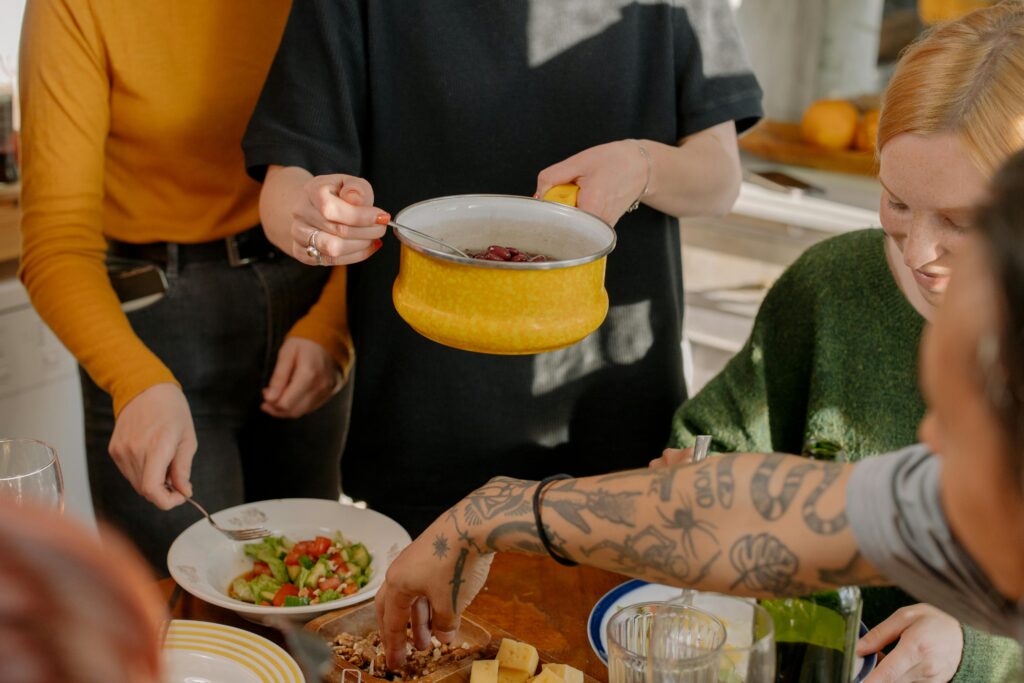
What to Do If Your Roommate Is Eating Your Food
The escalation ladder – start at step one and only move up if you need to.
Step 1: Small, Practical Changes (No Conversation Required)
- Label your food. Yes, it feels passive-aggressive, but do it anyway. Sometimes people genuinely aren’t tracking whose food is whose, and a name on a container is a surprisingly effective deterrent.
- Use separate fridge shelves. Physically separating your food creates implicit boundaries without a single awkward word.
- Share the basics. If your milk and butter are slowly depleting, you might as well split the costs. Splitwise or Monzo shared tabs work well for tracking communal food costs without anyone having to play banker.
Step 2: Have the Conversation (the bit nobody wants to do)
If it keeps happening, you have to say something. Your food can’t keep disappearing. There is mental labour in planning meals, creating a weekly list, and coordinating a grocery shop whether you are getting it delivered or going to the shops yourself.
So how can you have the conversation when labelled yoghurts and separate shelves are not working?
- Pick a calm moment to raise the conversation (not when you’ve noticed your clearly labelled leftovers are gone)
- Use “I” language whether it’s face-to-face or over text
- Be specific rather than making sweeping statements
- Come with solutions rather than complaints
Some conversation starters that don’t immediately put people on the defensive:
“I don’t mind if you need to borrow an egg or two, but could you ask first and replace it the next day? I plan my meals around what’s in the fridge.”
“I’m not going to make a big deal about the odd squirt of ketchup, but the vegetables I saved for my dinner keep disappearing – it means I end up with nothing to cook. Could you please check before helping yourself to fridge stuff?”
“I know we probably borrow bits form each other without thinking, but I’ve found I’m missing things I’d planned to cook with a few times now. Can we set a rule – if you didn’t buy it, just ask first?”
“I’ve noticed some of my food going missing here and there – just wanted to check in. If you’re struggling to get to the shops, maybe we could do a bulk order together?”
The last option is worth keeping in your back pocket if you suspect financial stress behind it. It gives your housemate a face-saving way out whilst still addressing the problem.
Step 3: Set Formal House Rules
If a direct conversation still doesn’t shift things, bring it into the structure of how the house runs. A simple house agreement takes it from personal to practical. Something like:
- If it’s not yours, ask before you use it.
- Replace anything you borrow within 24 hours.
- Communal food (milk, butter, condiments) is split via Splitwise. Personal food is personal.
It doesn’t have to be a formal document – a note in the house group chat that everyone acknowledges, or a jokey poster on the fridge, is enough. The visibility is the point.
It’s Not Really About The Food
Chances are, if your roommate has ever eaten your food, you’ll know how quickly it goes from ‘annoying’ to “why am I hiding crisps in my bedroom?”
It’s not really about the food. It’s about trust, fairness, and feeling comfortable in your own home. You deserve better than a cold war over cheese.
The good news is that it’s fixable – with a label, a conversation, or a clearer system. The vast majority of food thieves aren’t malicious; they’re just operating on different assumptions. And assumptions can change.
If this has happened to you, how did you handle it? Drop a comment below.